Well here we are. Another year has gone by. Each year, it goes by quicker and quicker. Each year, it grabs a hold of me and whispers, “you’re on a one-directional ride, buddy!” I’m now a quarter of the way through — no, scratch that, almost halfway through, actuarially — and the ride isn’t slowing down.
Hi, my name is Roman and this is my year in reading. Which is only partially about reading and more of an annual letter by way of books.
My life this year was a bit of a tumult. I left my role leading product development at myLaurel Health after their fundraise, and joined Within Health as their VP of Engineering. It marked a culmination of my 15-year journey from studying philosophy to doing technical work, by way of a very meandering walk through journalism, design, marketing, and product. It’s been a very diagonal career.
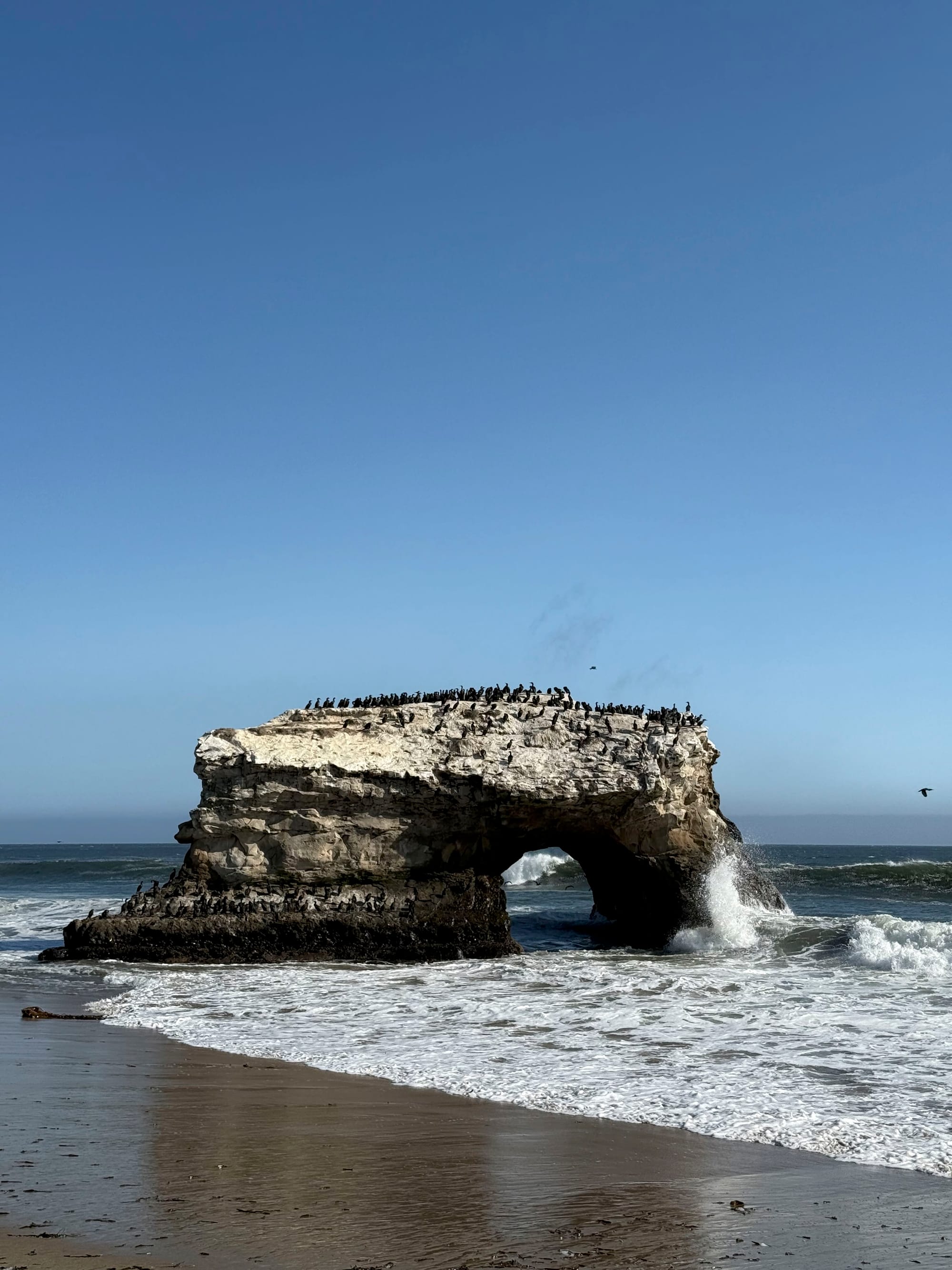
This year also involved a lot of travel. Congratulations to everyone who has gotten married! Please have your weddings closer to where I live next time! (That’s a joke. I don’t mind a good destination wedding, even if it's a destination only for me.) California during late summer was a particular highlight — I enjoyed Santa Cruz and the redwoods around San Francisco. But while travel is amazing, it didn’t lend itself to the unbroken spans of time I need for writing or project work. Though I wrote more this year than I did last year, there was even more that I didn't write, that I wanted to write but didn't have the time to get around to.
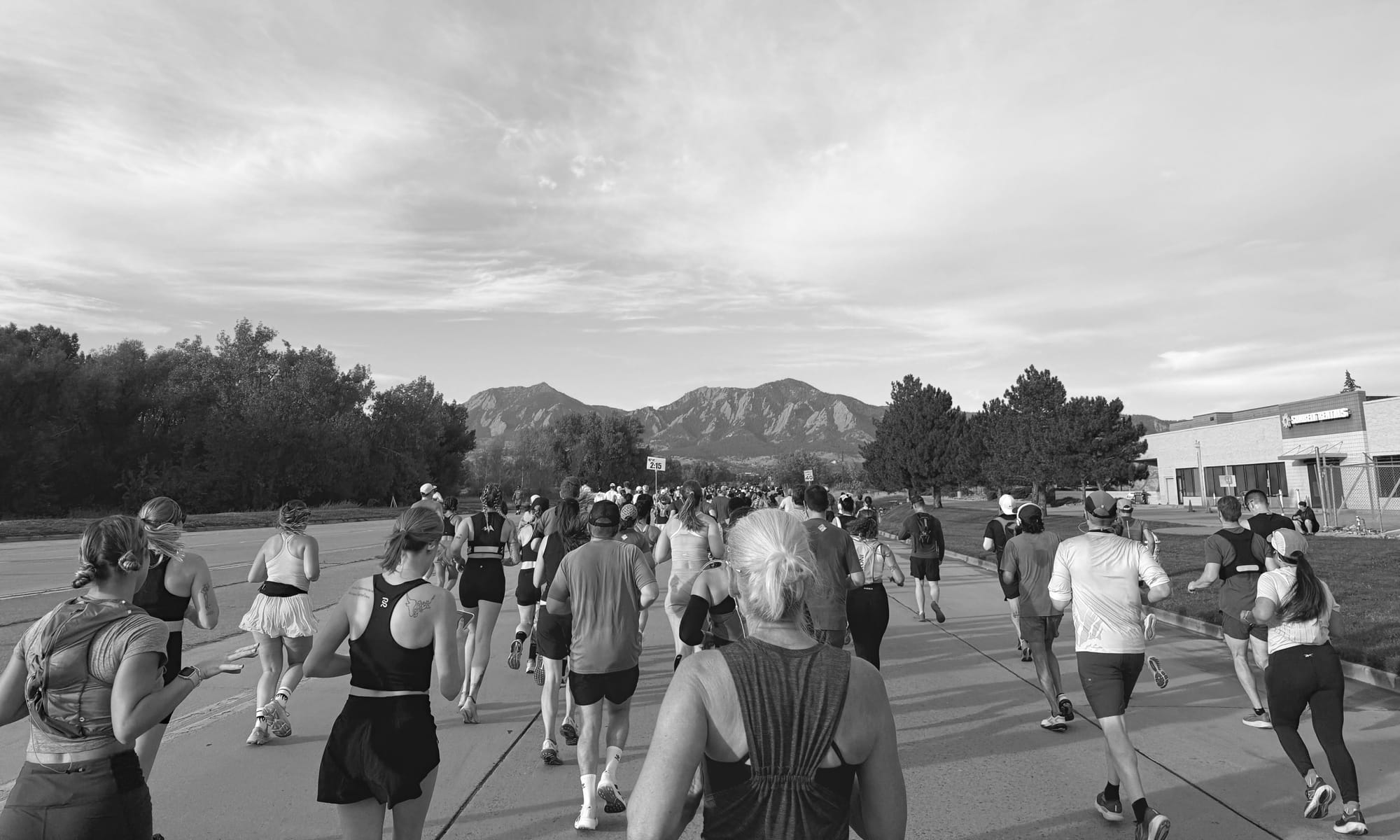
Long-time readers may also wonder if I finally ran a marathon last year. And the answer is… sort of, yes!
I’ve been training every year with mixed success: my first year, covid happened. My second year, we had a wedding that overlapped on the race day. My third year, my child was born. My fourth year, I humbly did just a half but I got a personal record. And now, year five of training, I had my most thorough training plan. I ran 3-4 times per week, and logged up to 24 miles on my longest training runs. I was feeling great. My best friend flew out to run with me and it was going to be our joint first marathon. And then…
… and then I ran half of it. At mile 15, an injury flared up so bad that I had to walk the next 10 miles. I ran again for the last mile to cross the finish line for an awful time of more than 6 hours total. I hated it, and it was much harder to drag myself through a slow, crippled walk for a miserable ten miles than it was to do any of the training runs. I was passed by everyone except those more injured than me, to finish fifth-from-last in my age group. More than my leg, it was my ego that felt injured. But I eventually crossed the finish line; the thought of a DNF after years of preparation was worse than calling for a ride home and nursing my leg.
So that was my year, and perhaps a metaphor for life: you have to just keep going, injuries and all.
Oh, but the books! My favorite books this year were:
- Mundo Mendo, Book One by Luis Mendo (2025), which came in as a dark horse favorite in the last few days of the year.
- Ducks by Kate Beaton (2022), an incredibly moving graphic novel and well worth all the accolades it received when it first came out.
- Monsters: a Fan’s Dilemma by Claire Dederer (2023), which I marked up nearly every page on and kept sharing screenshots of annotations to the annoyance of many of my friends in group texts.
- Legends and Lattes by Travis Baldree (2022), which was such a perfect antidote to the hell of news and politics that I immediately went out and got copies for a bunch of friends. And then they read them and shared them forward too.
- Apple in China by Patrick McGee (2025), which was an incredibly detailed and interesting book about what it means to "manufacture technology" and manage supply chains. I learned a ton, even though it wasn't directly applicable to my work.
One interesting observation was that this was the first year when I read more books digitally than in print. Last year, I wrote about noticing my print vs. digital reading patterns, and acting on those 'noticings' – I read faster digitally, though it was often lighter fare. I leaned into that this year, and my higher book count reflects that.
Cozycore vs. Existential Horror
I read more fiction than any prior year during 2025, and one of the themes of that fiction was “Cozycore vs Existential Horror”. I think the two themes bookended each other nicely. The cozycore bits were a necessary retreat from the stresses of work, life, and politics. The existential dread bits were an embrace of those stresses, perhaps a way of unconsciously bracing myself for a year of ‘of course it can all get worse, look see here!’ (I am not a horror fan, for the record).
Cozycore is many things to many people, but for me it was writing that had a warmth and net positivity — something that felt good to curl up with, the equivalent of a hot chocolate and a fire on a snowy day. Cozycore books tended to have very low stakes and were more focused on character development than on a plot propelled forward by conflict. For example: “The Long Way to a Small, Angry Planet” was ostensibly about a trip to open a wormhole near a resource-rich but aggressive planet, but ninety percent of the book was just about a crew of aliens getting to know each other. Similarly, “Legends and Lattes” was about an orc who decided that she didn’t want to do the dungeons and dragons bit anymore and instead wanted to open up a coffee shop. The plot was about building the shop, hiring staff, figuring out how to make the business work, and a small bit of conflict with the local heavies.
(Other cozycore books worth mentioning: “Tokyo These Days”, the "Hilda" comics, and "A Court of Thorns and Roses". These were skipping stones of calm through the year.)
Between them were books of existential horror and dread. I flew through four books in Charlie Stross’s “The Laundry Files”, a send-up of office work against a backdrop of Lovecraftian supernatural horror written in different thriller pastiches, where the stakes were increasingly upped with each book. I followed fast on that with “There Is No Antimemetics Department” by QNTM (not to be confused with “Antimemetics: Why Some Ideas Resist Spreading” by Nadia Asparouhova, also read this year, which drew on QNTM’s story as source material). This was genuinely horrifying and I couldn’t put it down. (“Where the Axe is Buried”, “Somna”, and “The Apartment in Bab-El-Louk” rounded out that ensemble.)
Existential horror seeped into my non-fiction reading too – or at least, I may have been more attuned to it than I may have been previously. For example, “Ducks” by Kate Beaton is a memoir-slash-graphic novel about two years working in the Canadian oil sands… and also about joblessness, sexism, adultery, casual misogyny, workplace deaths, and being raped. (The “ducks” of the title are the ducks that land in the tar sands and die, a metaphor for people seeking better lives but getting stuck.)
And “Monsters: A Fan's Dilemma” by Claire Dederer was about asking how we deal with art created by people who are monsters, who are problematic. How do you watch Roman Polanski or Woody Allen movies? How do you forgive writers and painters who are personally cruel, or abandon their families and children to focus on making great art? What set of cosmic scales do you use to weigh the quality of art against the monstrosity of the artists' lives? It was a wonderful read in the sense that it was a rare but successful work of Montaigne-style essay'ing: “an attempt”, grappling with questions to which there are no definitive or singular answers. Most things marketed as “essays” are typically opinion or editorials, and not actually “attempts”. So I found it quite lovely and full of interesting thoughts on every page. I left behind many highlights.
I also read "Things in Nature Merely Grow" by Yiyun Li, which has gotten quite a bit of "best of 2025" press already. I came to the book by way of a morbid curiosity — a nonfiction “memoir” (though that’s not the right word) from a mother who lost both of her sons to suicide. (If that isn't ‘existential horror’, I'm not sure what is.) How do you wrestle with something like that? How do you even begin? I struggled with it at first — the writing started with all the emotional heft of a discarded husk of corn, the sort of mechanical writing that you might do on autopilot when your only remaining skill is writing and you are deploying it as a final attempt to prevent a complete personal collapse. It was hard going.
But as I continued, the mechanics of the writing — the repetition of thoughts, memories, and fragments — began to feel like waves lapping a shore. It was meditative, intentionally looping back on itself in a process that was increasingly more alive, more aware, more emotional. I still didn’t like it, but I don’t believe that you’re supposed to particularly like a book from a mother who lost both sons, writing to and about the second loss. I can’t tell if it was good, but the more I read, the more I felt a begrudging respect for the writing, and then by the end — simply respect, with no qualifiers.
Artists’ Books
“It will be a miracle if your shop succeeds. But you cannot have the miracle unless you open.”
- Peter Miller, “Shopkeeping”
Another theme — broader and more persistent across my years of reading — has been a fondness for artists’ books. These are books that exist outside of economic reason. They aren’t commissioned. They often aren’t profitable. To paraphrase Fobazi Ettarh’s idea of "vocational awe", these are books that exist because someone in the world believed that it was work worth doing, and felt compelled to do the work regardless of any risk or cost or calculus.
Some of these books are mass-produced, some of them are bespoke, some of them make money, and some are created at a great personal cost. They can be big or small, and between their covers they are about any matter that the writer happened to concern themselves with. Sometimes, these books are a continuation of a long conversation with cultural predecessors; other times, they are in conversation only with themselves. They are not always books — they are often books, or book-shaped – but can be music, art, software, or any other thing. In all forms, they reflect a vision the artist had, a vision they went out of their way to make real.
So these book-shaped things are often joyous, magical things: they are imbued with a lot of heart and soul.
I also make artist book-shaped things from time to time, driven by some belief that if I leave behind a memento of having lived, my life becomes more than ‘tears in the rain’. These projects are my way of grappling with the dueling feeling of a fear of death and a celebration of life. To create is to be alive, to have been alive! (An armchair psychologist might remark that I was set off on this path when I stared too closely at an ornate little clay pot in the London Museum as a kid, grappling for half an hour with the idea that someone — a specific person — had made this thing and it has outlived them for nearly seven thousand years, a life and work reverberating across space and time.)
So with that, I celebrated the existence of Luis Mendo’s “Mundo Mendo, Book One”. Mendo is an illustrator living in Japan, and this is a collection of his illustrations, stories, and comics over the course of the previous year, lovingly packaged into a bunkobon-sized book. Mendo is an incredible illustrator — his lines and colors have a vibrancy and spring to them, and the book channels a certain Pan-Am 70s “Enjoy the flight!”-style energy, as if to say "this is fun, this is worth being a part of".
There is no narrative per se, but there is a breeziness of observation and reflection that exists to be enjoyable, useful, and sometimes because simply existing is reason in itself. The thread is Mundo's life. He interviews himself as a shapeshifting cartoon. He reflects on shirts and the material quality of things. He visits bookstores, writes about creative blocks, about how he has his studio set up, about moving out of Tokyo, about raising his kids. He looks at birds and meets with friends.
In a meta turn, Mendo describes the importance of such self-directed, non-commercial work: “When I think about how I arrived at what I am today as an artist, I realize personal work has always been the motor, the secret sauce and the reason for my humble success: doing work for me, without thinking about audience, reach, compensation or any other external element.”
And in doing so, the book is brimming with the sort of warmth and joy that comes from saying “I have this skill and I want to use it to make something beautiful in the world! Something that no one asked me to do, something I want to do just because.”
I am glad that this little thing exists. As Peter Miller writes about shops, “The world can get anything it wants. It cannot get a shop.” Left unsaid: a good shop — and for us readers, a good book — thoughtfully curated, thoughtfully composed, is given not gotten.
Miller continues:
There is no literal need for shops. Certainly no need for ties, nor extra-virgin olive oil, nor a baguette; no need for notebooks from Italy and dot grid notepads from Tokyo; no need for Danish carafes and Swedish tea light holders; no need for hand-printed cards from Paris; no need to restock pencil leads and better pens; no need to compare sketchbooks, nor study Perriand, nor review the work of designer Paul Rand and his wife Ann; no need for the street signs of Paris, the graphics of Barcelona, the stone walls of Vals, no need. But then, of course, "O, reason not the need." We shall as soon never cut flowers again, nor look to the night sky, nor walk in cool, shallow waters. Nor marvel, at the gifts of it all.
A book such as “Mundo Mendo” is a gift that has been given and savored, for which reason is not the reason.
It is in this spirit that I turned to support Luis Mendo’s continued writing and drawing after coming across it, and why I have done the same for Craig Mod’s “Special Projects” (something I talked about last year, with his “Things Become Other Things”). This is why I buy every risograph and weird little project that Robin Sloan prints up, why I back books on Kickstarter with alarming frequency, why I support small and local presses, and why I love nothing more than to buy an art print from a local artist at a coffee shop. I want more of this stuff to exist, damn it!
Such are my joys in this world: a celebration of someone wanting to put a thing out into the world — and having the skills to do so — that without them would simply not exist.
Letting Go
Every year, my “year in reading” post coincides with packing or unpacking all of my books into boxes. I’ve moved five times in the last five years, and we’re getting ready to move yet again, six for six. (Writing this is a necessary distraction from packing yet again). At this point my wife is taking my jokes of “let’s do ten moves in ten years” depressingly seriously. So: goodbye, colorful Colorado! Hello, garden state of New Jersey!
When I was in high school, I told everyone that I would never come back to New Jersey. I hated high school, I hated the suburbs, I rebelled against everything within my line of sight. I chose which college to go to based on how far it was from my childhood and every year, tried to get a little further and further away.
It was with this in mind that I came across a passage by Danny Meyer that gave me pause:
A pattern I’ve noticed in chefs is that many spend tremendous energy when they’re young working to build a life away from where and how they grew up, in order to free themselves and define who they are on their own terms. It takes a lot of confidence and emotional security for people—and especially chefs, whose cooking can so clearly reveal their roots—to feel they have accomplished enough in the outside world to “come home” in a culinary or an actual sense.
I can relate to spending tremendous energy trying to get away and recognizing that I need a lot of confidence and emotional security to “come home”. But is this a homecoming? I don’t know. I have grown, and I have a family of my own now. And as my little girl gets older, I want her to get to know family and be around friends, most of whom still live in the tri-state area. So whatever insecurities I have regarding moving back need to be put aside; that is something I think all parents grapple with at some point — to which degree do we pass on our traumas and emotional insecurities to our children?
Anyway, our hand was forced on this decision – our lease was not being renewed. Given “housing costs and affordability” (did you have that on your “books I read” blog post bingo card?), we decided that our best option was to move back; closer to fam, back to friends, back to traffic and turnpikes and the east coast hustle.
So my books are going into boxes again.
Every year, I tell myself that moving is an opportunity to thoughtfully hold everything I own and to Marie Kondo the heck out of it: does it bring me joy? Should it remain in my life? And every year, I push off packing until the last minute to minimize the time spent living out of boxes. And as our last last weeks approach, I throw all my books, office trinkets, and capital-T things into cardboard, slap some tape on them, and truck them to the next place.
This year, I started early. I tried selling some of my books on Amazon (earned a whole two dollars after all the shipping costs and fees and charges), some to local used bookstores (a few hundred dollars for some four boxes of books and records), and some just plain ole donating to Goodwill.
Letting go of books and records is hard for me, especially those which I bought ages ago but never got around to reading. They were enthusiastically aspirational purchases and letting go of them is the psychological equivalent of saying “I am no longer this person.” I don’t find it easy to admit that I am not the person I once was, nor the person who I wish myself to be. But there have been many such past me’s, and I know there will be many more to come – the exercise is necessary, the space for new me's needs to be created, the old me's need to be let go.
At the same time, there are some books — past selves — that I won’t let go of. Some books are memories, haptic or visual triggers, mementos. Severing yourself entirely from the past is just an illusion; the present is the way it is because the past was the way it was.
And other books are my anti-library, a collection of the unread which as Umberto Eco argues, is more valuable than the read ones.
Then there are the books I have held on to for years, waiting to be gifted. Wandering amongst my parents’ books was one of my favorite things to do as a child. I would pull down a book, read parts to see if I am interested in it, look at the covers, and imagine what they could be about. I did not understand half of them, hated a quarter, and loved a few. Later, some of them would be books I would be assigned in college, or come across in bookstores as ‘classics’. I’d find some mentioned in an appendix, or rediscover them for myself when going down a rabbit hole. There is and continues to be a pleasure in connecting those dots!
But I do not want my parents’ books. I have my own library. And the books I am holding on to, with the intention to gift to someone or to pass down, my daughter will likely one day not want them either. They are privately meaningful to me, intimate, in a way that they will not be to anyone else. No one wants to be burdened with a load of sentimental stuff neatly wrapped in a guilt about discarding or selling them. I would rather not pass that obligation to anyone else.
And so another book goes in the moving box, and another goes into the donation box. May the latter find nice homes! With each book, I feel a different emotion: a flicker of a past excitement, a memory of discovery, a reminder of an idea I wanted to learn about. I feel those things, and then let go of another pound of paper and ink.
(Other things I have let go of this year: a job. Our house. My car. Old art supplies. Shirts. Barefoot running shoes. Pretense to starting a healthcare data business. A bread maker. An ice cream maker. My garage workbench. A CNC machine.)
The Complete List of Books
Well we’ve gotten to the end of an introspective year, very few business books in sight. Twas a year for feeling, not for business'ing.
Here is my complete list of books, in an interactive list. I hope you find something to enjoy.
Thanks for reading
Useful? Interesting? Have something to add? Shoot me a note at roman@sharedphysics.com. I love getting email and chatting with readers.
You can also sign up for irregular emails and RSS updates when I post something new.
Who am I?
I'm Roman Kudryashov -- I help healthcare companies solve challenging problems through software development and process design. My longer background is here and I keep track of some of my side projects here.
Stay true,
Roman